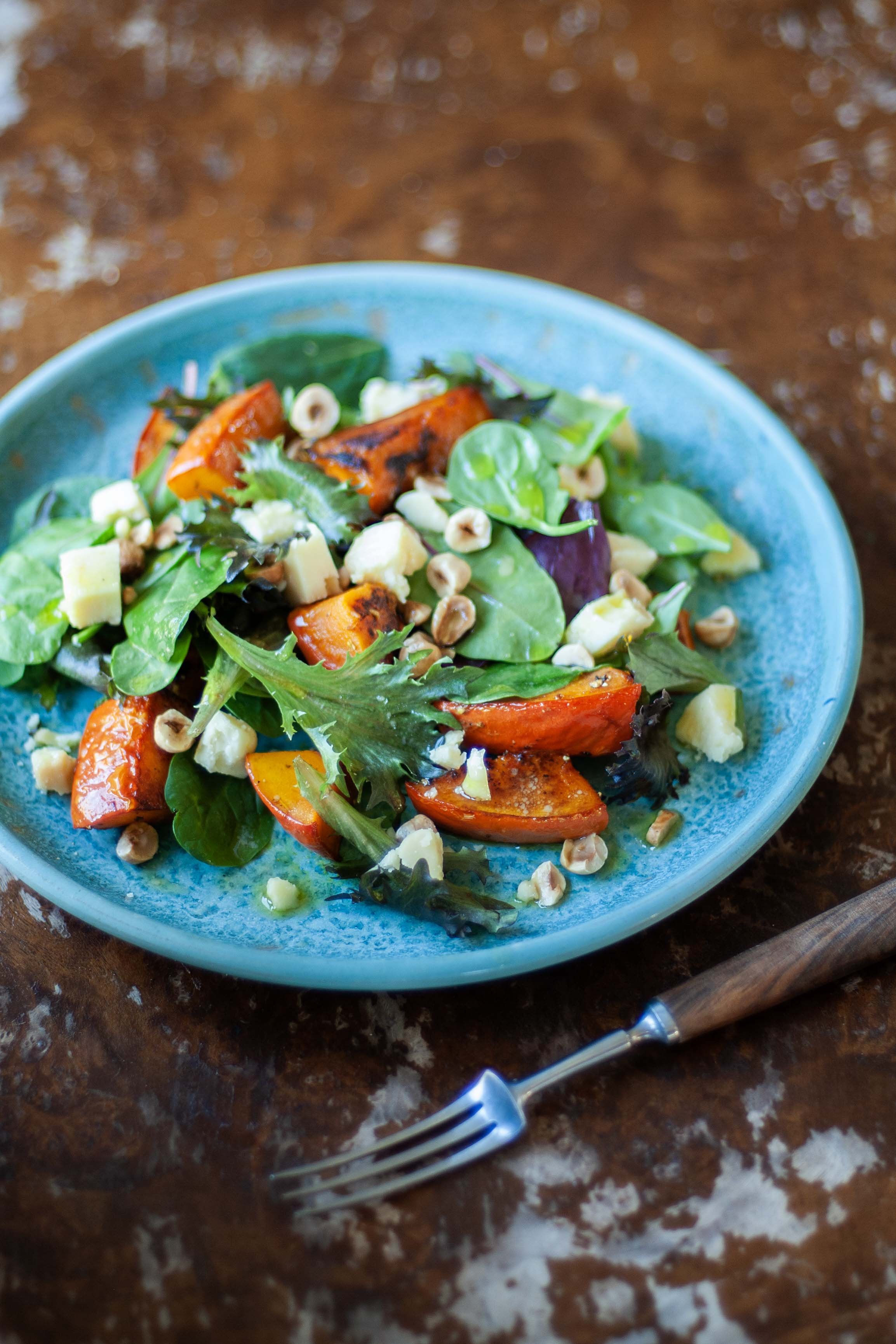
Roast squash, cobnut and cheese salad
A delicious salad for a light evening meal. Fresh cobnuts are so pretty, with their frilly husks wrapped like green overcoats around the pale shells. It’s worth the effort of shelling them: when fresh, the milky white kernels have a mild yet distinctive flavour. If you can’t find fresh cobnuts, you can use any kind of hazelnut instead.
Serves 4Approximately 600g red kuri squash, cut into wedges, skin left on
Olive oil
Salt and freshly ground black pepper
150g shelled cobnuts or hazelnuts, skinned
Mixed green salad leaves
150g mature cheddar (or similar)
For the dressing:
4 tablespoons extra virgin olive oil
2 tablespoons apple cider vinegar
1 teaspoon Dijon mustard
1 teaspoon honey
Preheat the oven to 190˚C (170˚C fan). Arrange the pumpkin wedges on a baking tray lined with baking parchment. Drizzle over a little olive oil and season with salt and pepper. Bake in the oven for about 25 minutes until just tender.
Meanwhile, chop the cobnuts and toast them in a dry frying pan over a low heat until they start to turn golden.
Whisk together the dressing ingredients until smooth, and season to taste.
Arrange the salad leaves and pumpkin slices on 4 serving plates. Thinly slice or pare the cheese into shavings with a vegetable peeler and scatter over the salad. Drizzle over the salad dressing, sprinkle over the toasted nuts, and serve.
-
Electric For best results, keep the steam vent open.
Wood-fired The oven dial should read between mod and hot.
Recipe from my book Autumn
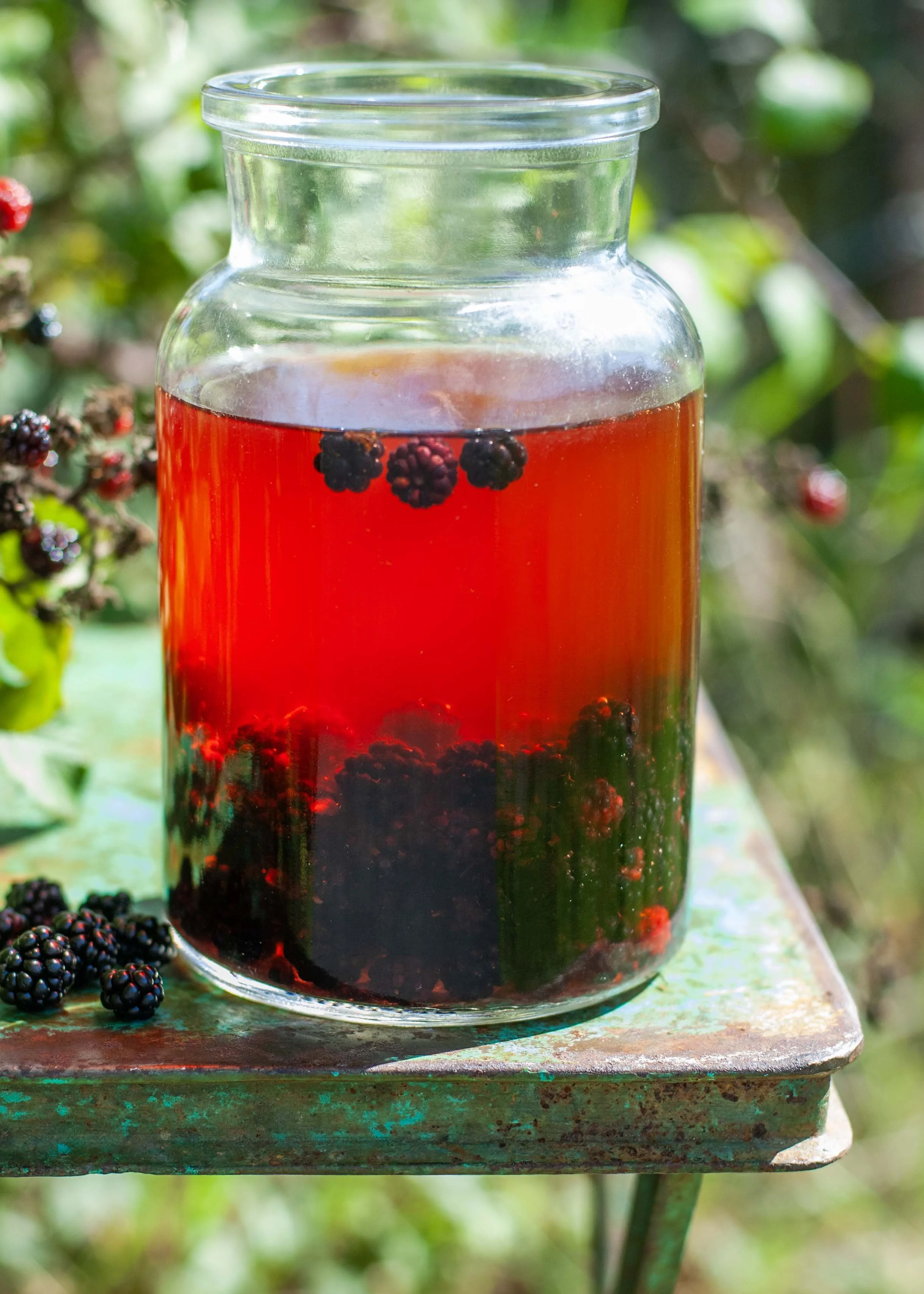
Bramble vinegar
A great way to use abundant hedgerow blackberries, this tangy, fruity vinegar is perfect for autumnal salad dressings and for adding to sauces. The acidity of vinegar enables it to extract flavours from fruits and herbs brilliantly. I haven’t given precise quantities here: you can make as much or as little as you like.
MAKES 1 jarBlackberries, picked over, rinsed and drained
Apple cider vinegar, to cover
Fill a glass jar with brambles and pour over enough vinegar to fully immerse the fruit. Put a lid on the jar and leave in a cool, dark place for at least a week – the longer the blackberries steep, the stronger the flavour.
Strain the vinegar through a sieve lined with a piece of clean muslin over a bowl. Gather up the fruit in the muslin and squeeze gently to extract as much liquid as possible. Pour into a sterilised glass bottle.
Recipe from my book Autumn
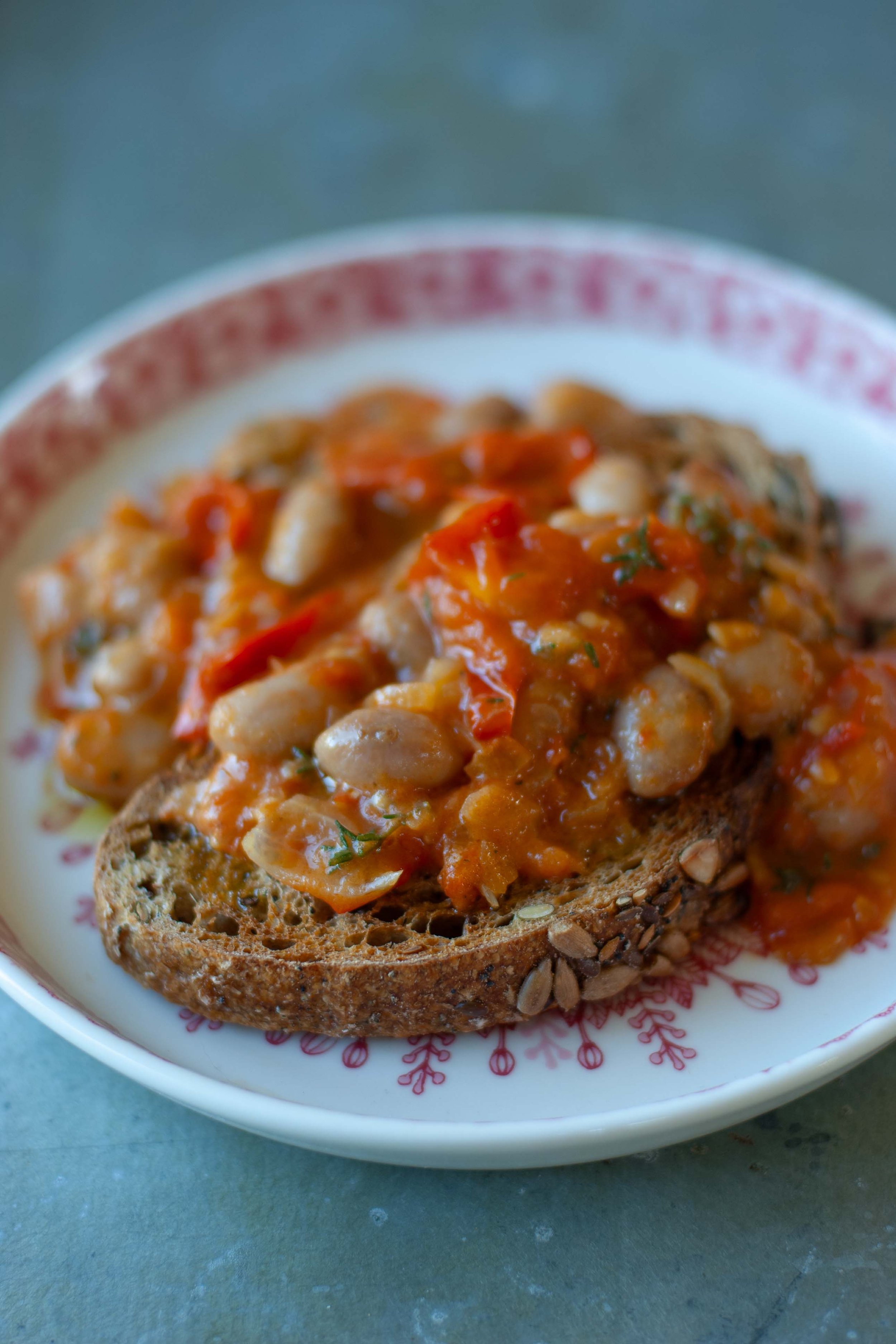
Posh beans on toast
This makes a nutritious breakfast, and is a great way of using up the last of the fresh tomatoes from the greenhouse. For extra protein, grate over some Parmesan-style cheese before serving, or top with a poached egg.
Serves 22 tablespoons extra virgin olive oil, plus extra for drizzling
4 tomatoes, chopped
2 cloves of garlic, crushed
1 × 400g can borlotti beans, drained
3 sprigs of thyme, finely chopped
A pinch of chilli flakes
2 slices or more of seeded wholemeal sourdough
Salt and freshly ground black pepper.
Put the olive oil into a frying pan set over a medium-high heat and add the tomatoes and garlic. Cook for about 5 minutes until the tomatoes start to break down (if very ripe, they will cook quicker). Stir in the cooked beans, thyme and chilli flakes, and simmer gently for a few minutes to heat through. Taste for seasoning.
Toast your bread and put it onto serving plates. Drizzle with olive oil and spoon over the beans. Drizzle over a little more olive oil if you wish.
Recipe from my book Autumn
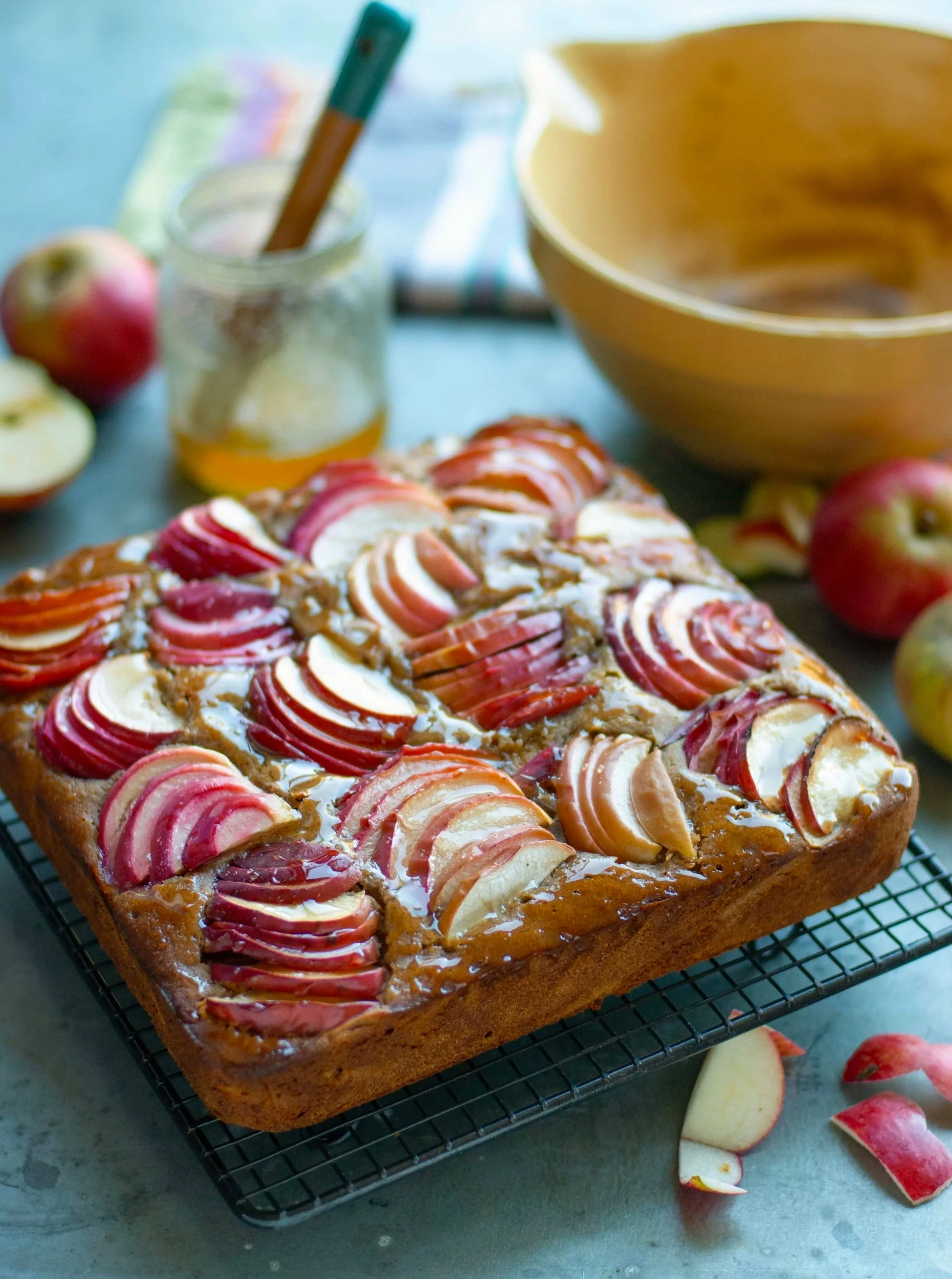
Apple and ginger buckwheat traybake
Buckwheat flour is nutritious, gluten-free and has a delicious nutty flavour. This is an easy cake to make, and delicious served warm as a pudding. It’s a healthy option, too: being packed full of apples, not too much sugar needs to be added.
My son Henry gave me a tip for grating fresh ginger: if you peel it and freeze it, you can grate it from frozen. That way, the ginger’s fibres are broken down, which prevents any stringy bits from clogging up the grater.
SERVES 8110g golden syrup
75g light muscovado sugar
75g butter
175g buckwheat flour
2 teaspoons baking powder
1 teaspoon bicarbonate of soda
2 teaspoons ground ginger
1 teaspoon ground cinnamon
A walnut-sized piece of root ginger, grated
1 Bramley apple, peeled and grated
2 eggs
For the topping:
4 eating apples, sliced
About 1 tablespoon honey
Preheat the oven to 170˚C (150˚C fan). Line a 20cm square cake tin with baking parchment.
Put the golden syrup, sugar and butter into a saucepan. Melt slowly over a low heat and leave to cool.
Put the flour into a mixing bowl with the baking powder, bicarbonate of soda, ground ginger, cinnamon, root ginger and grated apple. Make a well in the centre and add the eggs, along with the sugar and butter mixture. Beat together and pour into the prepared cake tin.
Top with the sliced apples and bake for about 40 minutes until firm to the touch and just starting to colour. Remove from the oven.
Warm a little honey in a saucepan and lightly brush over the top of the cake to glaze, then cool on a wire rack.
-
Electric For best results, keep the steam vent closed.
Wood-fired The oven dial should read mod.
Recipe from my book Autumn
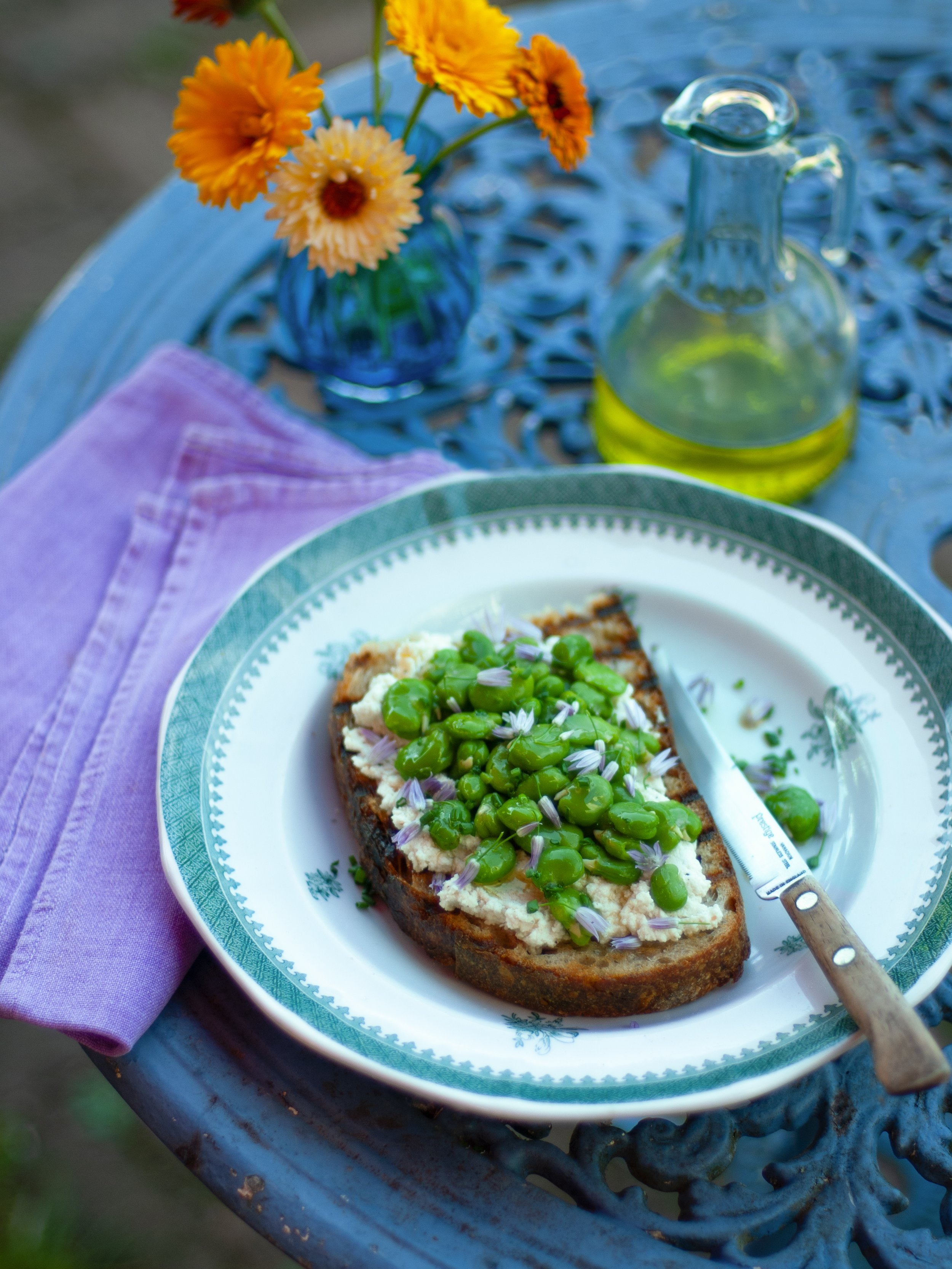
Broad bean bruschetta
Barbecue-grilled bread topped with vivid green beans and spread with whipped ricotta flavoured with lemon zest, herbs and a sprinkling of fresh chive flowers makes a perfect starter to a barbecue meal. The fiddliest part is the skinning of the broad beans – but it is so worth it, for the flavour as well as the visual impact.
SERVES 4500g broad beans in their pods
Sea salt and freshly ground black pepper
2 tablespoons extra virgin olive oil, plus extra for drizzling
Grated zest and juice of 1 lemon
4 slices of sourdough bread
200g ricotta cheese
A small handful of mixed herbs such as chives, mint and chervil, finely chopped
4 chive flowers, to garnish (optional)
Pod the beans and cook them in a pan of salted boiling water for about 2 minutes (the fresher the beans, the quicker they will cook).
Drain the beans, run under cold water to stop them overcooking and then pop them out of their skins. Put into a bowl, season well and add the 2 tablespoons of olive oil and the lemon juice.
Drizzle a little olive oil over the bread slices, and cook over a barbecue, on a ridged griddle pan, or under a conventional grill until golden brown and crisp.
Mix the ricotta cheese with the lemon zest, plenty of freshly ground black pepper and the chopped herbs. Taste and adjust the seasoning.
Spread the ricotta over the bread, and spoon the beans on top. Scatter with chive flowers (if using).
-
Electric For toasting the bread, the grill dial should be set to 12 o’clock.
Wood-fired You can toast the bread on the bottom of the oven – the dial should read VERY HOT.
Recipe from my book Summer
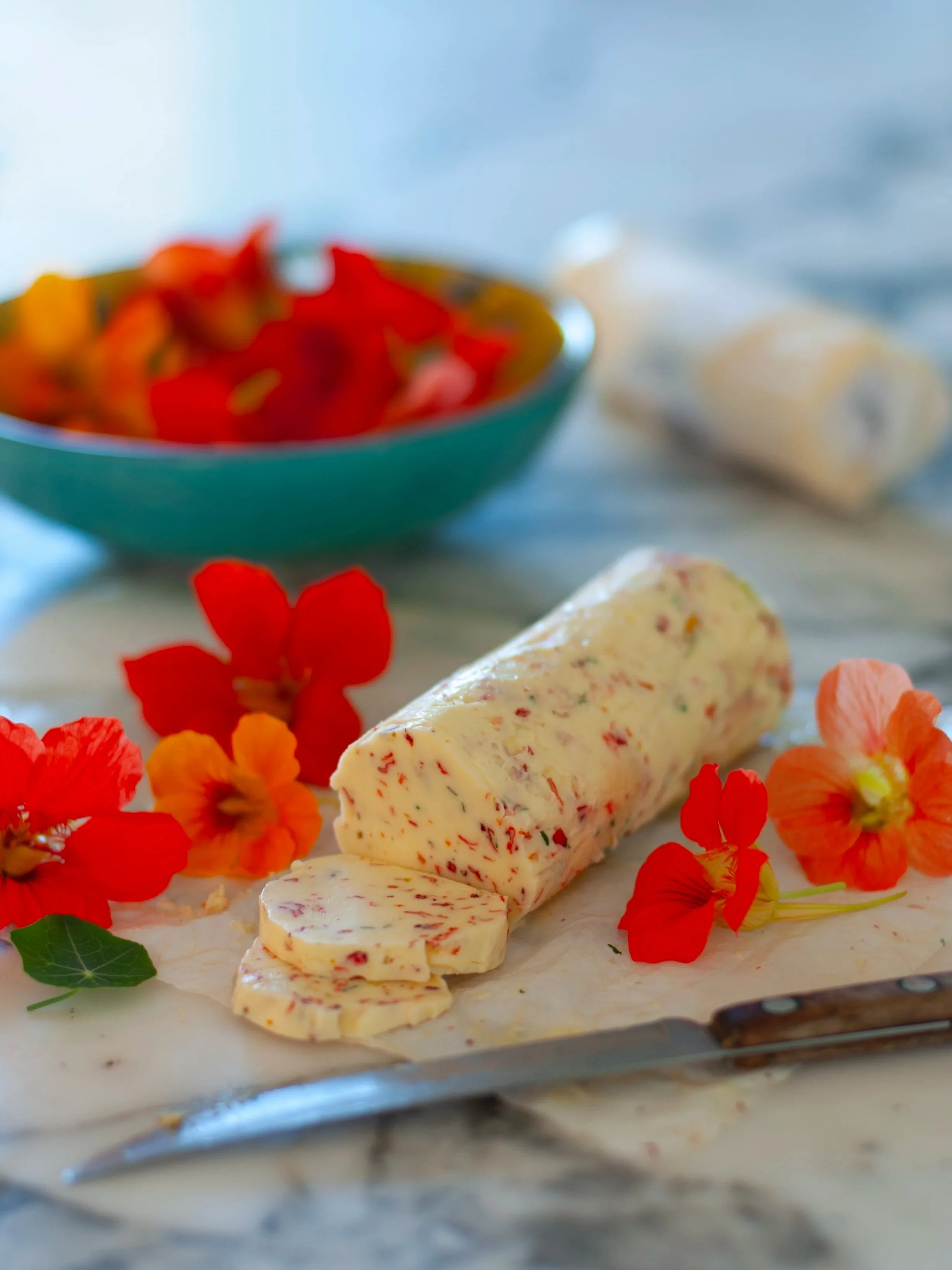
Nasturtium butter
This simple butter will bring a spicy accent to many summery dishes. Spread some under the skin of a chicken breast before baking, melt some over roasted vegetables, or simply serve with warm, crusty bread. I like to serve a slice of this butter, with some lemon zest added, on grilled fish.
Nasturtiums flower all summer long and are so colourful. Their round green leaves have a peppery flavour that is an excellent addition to salads and this butter. They are quite strong in flavour, so use sparingly.
You can use this method with other savoury edible flowers, such as thyme, sage and chive, and the petals of marigolds.
SERVES 8200g butter, softened
A handful of nasturtium flowers (petals only), finely chopped
A couple of nasturtium leaves, finely chopped
Using a fork, or in a food processor, work the butter until it is very soft, then add the chopped flowers and leaves, and mix well.
Scoop the flavoured butter onto a piece of baking parchment. Roll the paper over the butter, shaping it into an even-sized log. Twist the ends of the paper firmly to seal it.
Chill for about 30 minutes until firm. Store in the fridge for up to a week, or freeze and use, sliced into discs, straight from the freezer.
Recipe from my book Summer
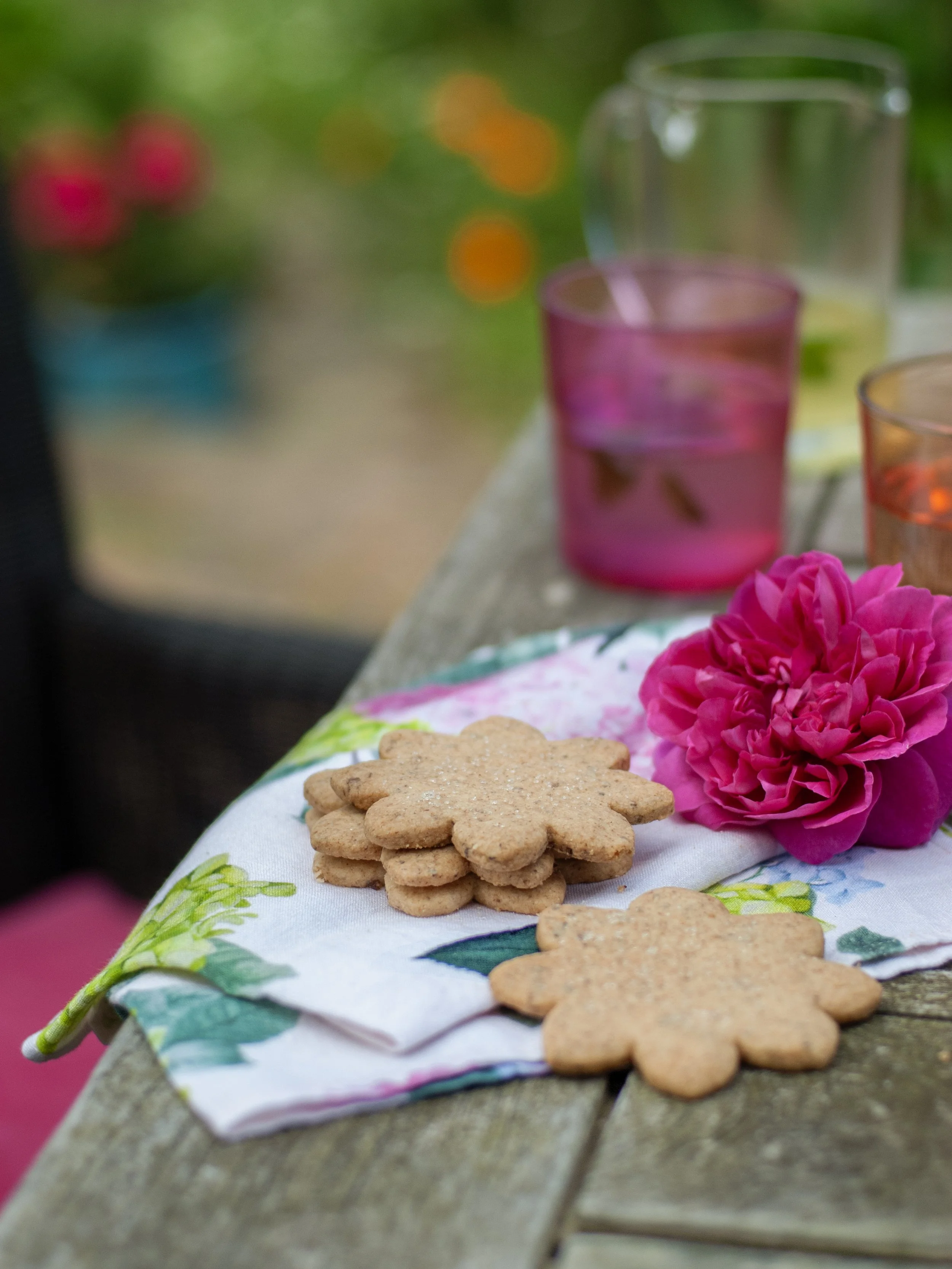
Rose petal and cardamom shortbread
The Roseraie de l’Haÿ variety of rose in our garden produces wonderfully fragrant blooms. I like to gather the petals and dry them in the slow-cook oven of my Esse stove for a couple of hours, filling the kitchen with their gorgeous perfume.
I use the dried petals in these crumbly, melt-in-your-mouth biscuits. They make the most of the rose’s fragrance and would be the perfect edible gift.
Note that you need to dry and cool the rose petals before you start making the shortbread. If you don’t have any rose petals, you could make chocolate shortbread instead – simply replace 30g of the cornflour with cocoa powder.
MAKES ABOUT 22 BISCUITS, depending on their size1 large handful of fresh rose petals (or more, if you want to make extra to use another time)
7 green cardamom pods
180g butter, softened
90g golden caster sugar
170g spelt flour
100g cornflour
First, pick your roses – ideally on a dry, sunny day. Gently remove the petals and spread them in a single layer on a baking sheet. Put them in your oven set to its lowest setting for a couple of hours, until dry and papery, but not brown. Leave to cool thoroughly, and store in an airtight container until you want to use them.
Lightly crack the cardamom seeds and extract the black seeds. Discard the husks.
Put the butter and cardamom seeds into a mixing bowl and beat until soft, then add the sugar and beat well. Add the flour, cornflour and a handful of crushed dried rose petals, and mix well to give a soft dough. (Alternatively, put the butter, sugar, cardamom seeds, flour, cornflour and a handful of crushed dried rose petals into a food processor, and pulse until a soft dough forms.)
Wrap the dough in cling film and chill for about 30 minutes.
Preheat the oven to 170˚C (150˚C fan) and lightly flour your work surface. Cut the ball of dough in two, and roll out one half until the thickness of a pound coin.
Use a cutter of your chosen shape to stamp out your biscuits, then gather the trimmings and re-roll as necessary. Place the biscuits on a lined baking tray,
spacing them out well.
Bake for about 15 minutes or until lightly golden. Let them cool on the tray for 10 minutes, then transfer the biscuits to a wire rack to cool completely. Repeat
with the remaining dough.
The biscuits will keep in an airtight container for up to a week.
-
Electric For drying the rose petals, use the slow-cook oven. For best results, bake the biscuits with the steam vent open.
Wood-fired For drying the rose petals, place them on a wire rack near the stove for several hours. For baking the biscuits, the oven dial should read between MOD and HOT.
Recipe from my book Summer
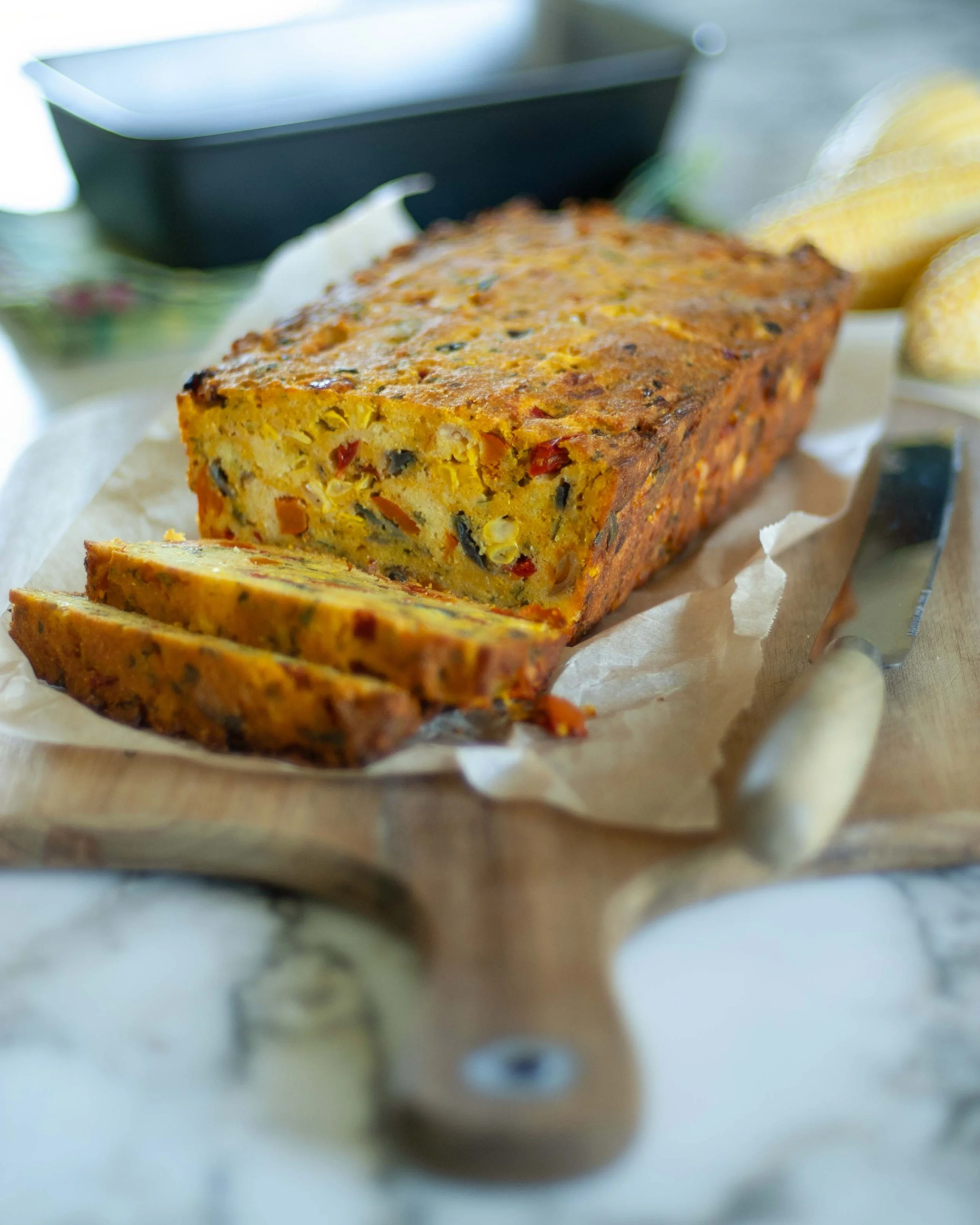
Jewelled cornbread
This is a deliciously moist, colourful loaf full of late summer vegetables It makes an excellent alternative to bread for anyone who is gluten-free. In the autumn you can replace the sweet potato with squash.
SERVES 8–102 tablespoons olive oil
1 red onion, finely chopped
300g sweet potato, diced
1 red pepper, diced
2 cloves of garlic, crushed
110g gluten-free flour
2 teaspoons baking powder
110g polenta
50g ground almonds
110g butter
4 large eggs, beaten
80g sweetcorn kernels
5 halves of sun-dried tomato, chopped
50g strong Cheddar, grated
A small bunch of mixed herbs such as parsley, basil and thyme
Salt and freshly ground black pepper
Preheat the oven to 180˚C (160˚C fan). Line a 1-litre loaf tin with baking parchment.
Put the oil into a large frying pan set over a medium heat and add the onions, sweet potato and red peppers. Stir well and cook for about 10 minutes until they begin to soften. Stir in the garlic and cook for another minute. Set aside to cool.
Using a food processor, whizz together the flour, baking powder, polenta, ground almonds and butter until they resemble fine breadcrumbs (or rub in by hand). Add the eggs and mix to a smooth batter. Fold in the sweetcorn, sun-dried tomatoes, cooked vegetables, cheese, herbs and a good seasoning of salt and pepper.
Spoon the mixture into the prepared tin and bake in the oven for about 50 minutes, until a skewer inserted into the centre of the loaf comes out clean. Leave to cool in the tin for 10 minutes, before turning out onto a wire rack to cool completely.
-
Electric For best results, keep the steam vent closed.
Wood-fired The oven dial should be at the lower end of hot.
Recipe from my book Summer